
Web Development
Website Maintenance Services for Restaurant Tech Stacks
Sterango explains website maintenance services for restaurants: hosting, updates, security, and integration with reservations, ordering, POS, and email.
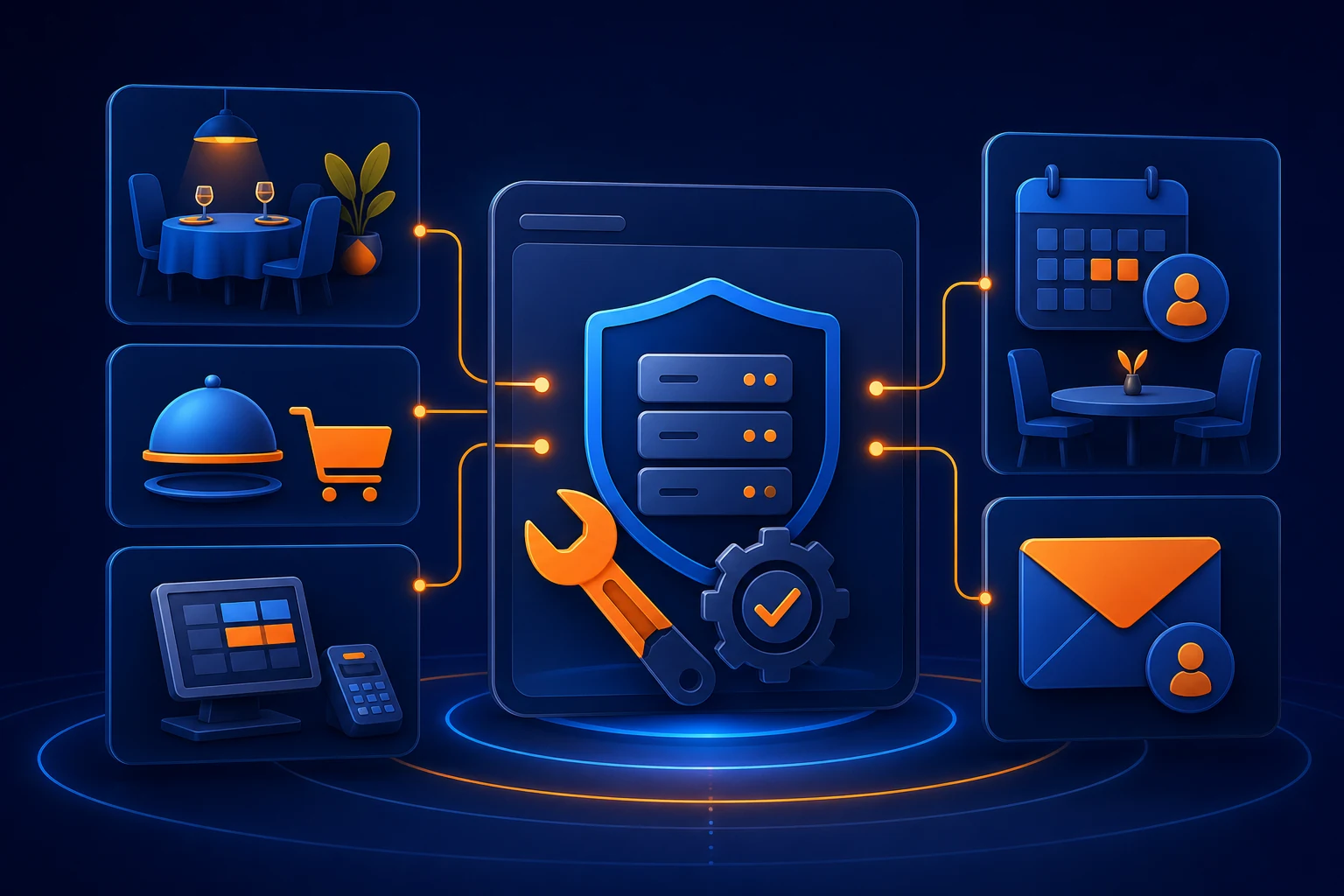
As a restaurant owner, I do not need another dashboard to admire between prep, payroll, and a Friday dinner rush. I need website maintenance services that keep the information guests rely on correct: today's menu, current hours, reservation links, ordering buttons, private-event details, and the address Google is showing hungry people at 8:47 p.m. Managed hosting and maintenance means someone is responsible for the technical work behind that reliability while the restaurant runs its actual business. Discovering that the holiday-hours update never published after the dining room has filled with people expecting brunch is not glamorous either.
Website maintenance services keep the guest-facing details current
A restaurant website is an operating tool. Guests use it to decide whether to visit, reserve a table, order dinner, buy a gift card, or contact the restaurant about an event. When the details are wrong, the cost is immediate: wasted calls, frustrated guests, canceled orders, and staff pulled away from service to explain what the site should have said.
Menu and hours changes need a clear request path
Managed maintenance should cover the updates that affect normal restaurant operations. That can include publishing a revised menu PDF or menu page, changing holiday hours, adding a temporary closure notice, updating a seasonal promotion, replacing an event announcement, or correcting a link that is sending guests to the wrong place.
The restaurant owner should not become a part-time web editor. Sterango's managed model is built around designing, hosting, and maintaining the site rather than handing over a CMS and expecting the client to manage it. A restaurant sends the approved change, the update is made, and the site remains consistent with the restaurant's branding and technical setup.
Accuracy matters more than adding another feature
There is a temptation to treat every restaurant website issue as a reason to add more software. Usually, the first job is simpler: make the existing information dependable. The menu should match what the kitchen is serving. The hours should match the door. The reservation button should lead somewhere useful. That is less exciting than a presentation full of "digital transformation" language, but it keeps a guest from arriving on a day the restaurant is closed.
Reservation, ordering, POS, and email tools still have separate jobs
Most restaurants already use specialized platforms because those tools do specific work well. OpenTable or Resy handles reservations. Toast or Square may handle online ordering and payments. A POS system runs transactions and reporting. An email platform sends campaigns and captures subscribers. The website should connect guests to those systems without pretending it has to replace them.
The website is the front door, not the whole building
In practical terms, managed maintenance includes checking that reservation links, ordering embeds, gift-card links, contact forms, and email signup forms continue to function on the site. If an embedded ordering module stops displaying after a browser, plugin, or platform update, someone needs to identify whether the issue is on the website side, the provider side, or both.
That does not mean a website team can alter a restaurant's Toast menu, access its payment settlement settings, change Resy account permissions, or repair an outage inside a third-party platform without the required account access and authority. Those are separate systems with their own support channels. Good maintenance clarifies the handoff instead of promising magic.
Google Business Profile needs to agree with the site
Google Business Profile is another critical guest touchpoint, especially for directions, hours, phone calls, and holiday notices. Website maintenance can help ensure the site's public details are aligned with the information the restaurant publishes there. The restaurant still needs ownership of its Google account, and changes within that profile require proper access. But when a guest sees one set of hours in Google and another on the website, nobody wins that argument, not even the chef.
Embeds need periodic checks. An embed can look fine on a quiet Tuesday and fail during service because the reservation provider changed its script, a browser blocked a resource, an API setting expired, or a plugin update created a conflict. "It worked when we launched" is not a maintenance strategy. A live restaurant site needs periodic checks and a clear person to contact when a guest-facing tool breaks.
Hosting, monitoring, and backups matter most when the site fails at the wrong time
Every website depends on infrastructure: a server, software, security updates, domain settings, encrypted connections, and the outside services connected to it. Managed hosting means that infrastructure is actively managed as an ongoing monthly service, not treated as a forgotten line item until something goes wrong.
Monitoring catches problems before a guest reports them
Uptime monitoring checks whether the website is reachable. If the site goes down, the maintenance team can investigate whether the cause is hosting, a software error, a domain or DNS issue, a failed update, or an external dependency. On a Friday night, that distinction matters. A restaurant does not need a lesson in server logs while the ordering button is unavailable; it needs the issue identified and addressed as quickly as the situation allows.
Monitoring cannot prevent every outage involving the internet, a third-party reservation platform, or a payment provider. It detects an issue, confirms its source, and prompts a response rather than waiting for an unhappy guest to become the monitoring system.
Backups provide a recovery option
Backups preserve recoverable copies of the website so a problem caused by a bad update, accidental deletion, corrupted files, or a security incident can avoid a full rebuild. If a Friday-night change causes a key page to fail, a known-good backup can be part of the recovery path.
Backups have limits. They restore the website content and configuration covered by the backup process; they do not recreate a lost reservation inside OpenTable, reverse a completed POS transaction, or restore data that lives only in a third-party account. A responsible maintenance plan says this plainly before there is an emergency.
Know what a restaurant maintenance plan covers before you need it
"Maintenance" can mean almost anything if nobody defines it. Before signing up, ask what routine work is included, how urgent issues are reported, who owns key accounts, and what happens when an issue involves an outside provider. The answers should be specific enough to use during a service rush.
- Content updates: Are menu, hours, event, and announcement changes included? What information must the restaurant provide?
- Technical upkeep: Does the plan cover hosting, software updates, security work, domain and SSL oversight, and broken-link checks?
- Monitoring and backups: Is site availability monitored, and how are backups maintained and restored?
- Third-party tools: Will the team test reservation, ordering, contact, and email connections after relevant updates?
- Scope boundaries: What requires separate work, such as a new page, a redesign, POS configuration, account administration, or custom software changes?
- Communication: Who can request changes, where should urgent issues go, and what access does the restaurant retain?
A sensible plan establishes responsibility for the site, keeps its integrations under observation, and makes the next step clear when an outside system is involved. That is a far better arrangement than discovering, during a holiday weekend, that everyone assumed someone else was watching the ordering link.
Managed maintenance lets the restaurant stay focused on service
Restaurants already manage enough moving parts: staffing, inventory, reservations, vendors, guest feedback, and whatever fresh surprise the day decides to serve. The website should support those operations rather than create another technical chore. Sterango builds custom front ends instead of templated page-builder sites and provides the ongoing hosting and maintenance needed to keep those sites available and current. Guests can find accurate information and reach the tools they need while the restaurant team stays focused on the room, the kitchen, and the numbers.
When you're ready to discuss managed website hosting and maintenance for your restaurant, contact Sterango.
Need help with your website or software?
Tell us what you need built, repaired, or measured.
Start a project