
Web Development
Custom Web Application Development: Cost, Time, Systems
Sterango addresses cost, timelines and existing systems in custom web application development with direct, practical answers for home services owners today.
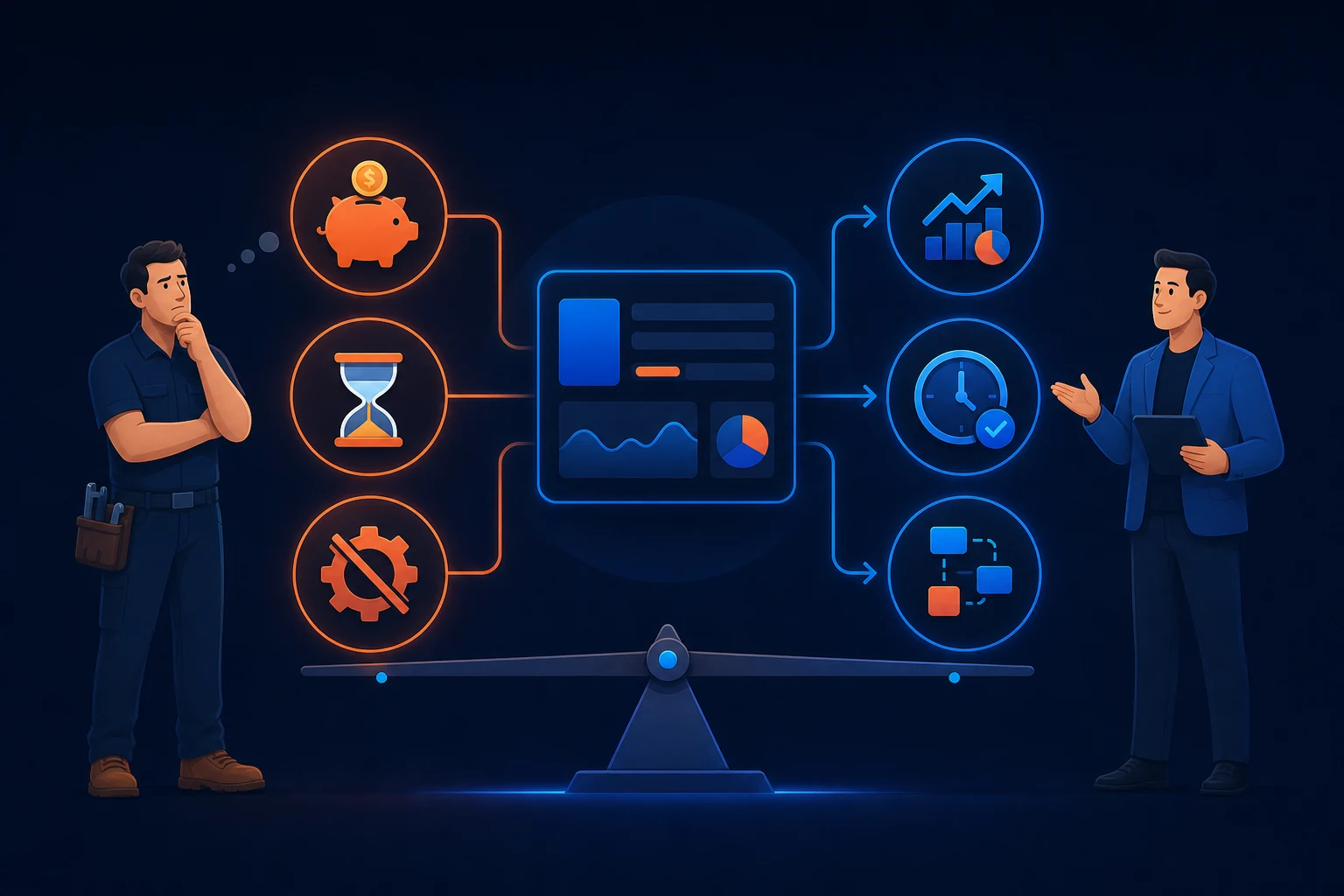
If you run a plumbing, HVAC, electrical, or landscaping company, you have probably heard the pitch for custom web application development before: build a dashboard, connect your systems, give the office a better way to run jobs. Then the practical questions show up. How much is this going to cost? How long before we can use it? Why replace the software we already have? Will dispatchers and technicians actually use another screen? Those are fair objections. A custom app is not the right answer for every business. But when paper tickets, disconnected scheduling, duplicate entry, and missed follow-ups are costing time every week, an honest answer is more useful than another cheap software subscription.
"Custom web application development costs more than a $30-per-month tool"
Yes, it does. A monthly SaaS subscription is cheaper to start because you are buying the same system thousands of other companies use. That can be perfectly fine when your process fits the software without workarounds.
The problem starts when the "cheap" tool creates expensive habits. Your dispatcher writes job details in one scheduling tool, then enters the same customer information into invoicing. Technicians send photos by text because the field app is awkward. Estimates get copied from a spreadsheet into an email. The owner spends Friday afternoon asking which jobs were completed, which invoices are waiting, and which maintenance customers have not been called.
The real cost is duplicate work and missed follow-up
A custom application should not be sold as a fancy replacement for software that already works. Consider it when the gaps between your existing tools have become part of the daily routine.
- A plumbing dispatcher receives calls, creates paper job tickets, and later re-enters the same details for billing.
- An HVAC company has service agreement data in one system and technician availability in another.
- An electrical contractor tracks estimates in email, job progress in text messages, and invoices in accounting software.
- A landscaping company knows recurring work is due, but has no clean view of crews, routes, materials, and open balances in one place.
Custom work costs more than a basic subscription. The question is whether your current process is quietly costing more in office labor, delayed invoices, missed service calls, and poor visibility.
Start with the expensive problem, not a giant wish list
Control cost by building the first version around one operational bottleneck. That might be a dispatcher dashboard, a job-status workflow, a customer follow-up system, or a connection between scheduling and invoicing. It does not need to be an all-in-one replacement for every tool you own.
Sterango can design and build custom front ends and software around the way your company handles work. The first release can focus on the process creating the most friction instead of trying to solve every future problem on day one.
"I cannot wait months without seeing anything useful"
You should not have to. A long silent build is one of the fastest ways for an owner to lose confidence in a software project. If you hand over your requirements, hear nothing for weeks, and get a surprise demo near the finish line, you are taking on too much risk.
Visible progress should arrive before the final build
A serious project starts with a clear picture of the workflow, including who uses the system, what information they need, what happens when a job moves forward, and where the data needs to go. Before a full app is built, you should be able to review screens, user paths, and the order of operations.
For a focused first release, planning and interface design should happen in weeks, not disappear into a black hole. A dispatcher-facing tool with a defined workflow can often move from discovery into a working build in a matter of weeks, while a larger system with accounting, scheduling, customer, and field-team integrations will take longer. The difference is scope, not mystery.
Implementation reality: The slow part is often not writing code. It is deciding what happens when real-world exceptions show up. A technician cannot close a job because a part is backordered. A customer changes the address after the crew is dispatched. A service call becomes an estimate. An invoice needs approval before it goes out. Good software accounts for those situations instead of pretending every job follows the ideal path.
Build around the people who do the work
Your office staff should not have to translate a developer's language into field instructions. Dispatch needs quick access to the day's jobs, customer notes, crew status, and next actions. Field staff need only the information required to complete the job, document work, and flag issues. Owners need a straightforward view of what is booked, completed, delayed, and unpaid.
A useful implementation is usually phased. Get one workflow working in production. Let the team use it. Find the friction. Then add the next piece with real operating feedback instead of guesses made in a conference room.
"We already have a system, even if it is not perfect"
You probably should keep parts of it. "We already have a system" is often a warning against replacing tools that your people understand and depend on.
If your accounting platform is doing its job, there may be no reason to rebuild accounting. If your scheduling software handles appointments well, it may not need to be thrown out. The opportunity is often in the gap between systems, where information gets copied, forgotten, or buried.
Custom software should fill the gaps, not create new ones
Consider the owner who started with a $30-per-month SaaS tool. It worked when there were a few technicians and one person answering the phone. Now the business has recurring maintenance work, larger jobs, multiple crews, and customers who expect updates. The owner has added spreadsheets, shared inboxes, text-message threads, and workarounds because the original tool cannot reflect how the company now operates.
The SaaS tool was not a bad decision. The business outgrew the narrow process it supported. Custom web application development can connect the pieces that matter most, provide a better internal dashboard, or create a workflow the existing software does not offer.
Before building, identify what must stay, what can connect, and what should be replaced. That keeps the project grounded. It also avoids paying to recreate features you already have.
"I do not want to be trapped with one vendor or another unused dashboard"
You need direct answers, not vague promises. A custom application has an ongoing relationship behind it. It needs hosting, maintenance, security updates, and someone accountable when a workflow breaks or needs to change. That is part of running business software responsibly.
Ask how ownership, access, and maintenance will work
Before signing anything, ask what data you can export, where the application is hosted, how support requests are handled, what ongoing maintenance covers, and what happens when you need a new feature. Ask who controls domain access, third-party accounts, and critical integrations.
Sterango operates as a fully managed partner, designing, building, hosting, and maintaining the work rather than expecting a business owner to log into a CMS or manage technical upkeep. For a home services owner, that should mean fewer technical chores, not less clarity. The agreement and project plan should make responsibilities plain.
If dispatch and field staff will not use it, it is not finished
The office does not need a dashboard with every metric imaginable. It needs a screen that helps someone answer the phone, schedule work, assign a crew, check job notes, and move to the next task without hunting through five tabs.
Likewise, a technician will not adopt an app that requires ten steps to mark a job complete. Adoption comes from reducing work: fewer phone calls to the office, fewer repeated customer details, clearer job notes, easier photo uploads, and a simple way to report what happened on site.
Ask, "What task will this remove from their day?" If there is no clear answer, do not build that feature yet.
Custom software is an operating decision for a home services company. If your current tools still support the way you schedule, dispatch, complete, invoice, and follow up on work, keep using them. If your team is trapped in duplicate entry, paper tickets, disconnected systems, and constant manual checks, a focused custom application can give you a cleaner way to run the business without forcing your operation into someone else's template.
When you're ready to discuss these questions, Sterango is one call away.
Need help with your website or software?
Tell us what you need built, repaired, or measured.
Start a project